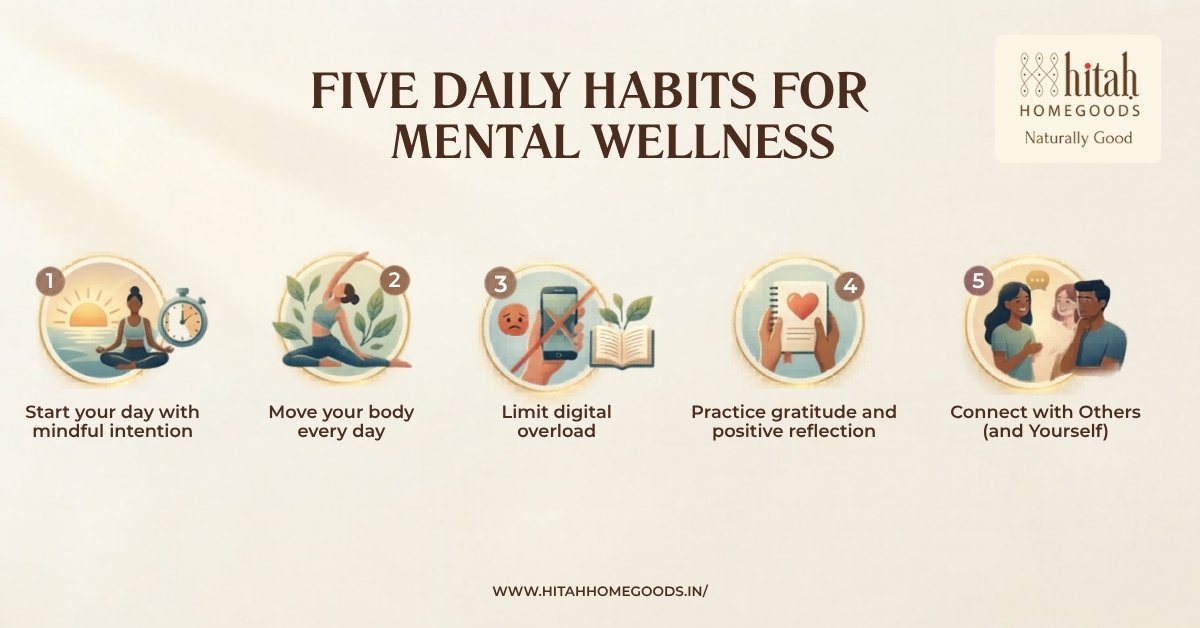
In a fast-paced world where demands constantly compete for our attention, mental wellness is no longer a luxury, it’s a necessity. Just as we care for our physical health through exercise and nutrition, our minds require consistent, intentional habits to stay balanced, resilient, and clear. The good news is that mental wellness doesn’t require drastic life changes. Often, it’s the small, daily actions that create the most meaningful impact over time.
Here are five simple yet powerful daily habits that can significantly improve your mental well-being.
1. Start Your Day with Mindful Intention
How you begin your morning often sets the tone for the rest of your day. Instead of immediately reaching for your phone or diving into tasks, take a few moments to center yourself.
This could be as simple as sitting quietly for five minutes, focusing on your breath, or setting a clear intention for the day. Ask yourself: How do I want to feel today? What matters most?
Practices like meditation, journaling, or even a short gratitude reflection can help create a sense of calm and direction. When you start your day with awareness rather than reactivity, you’re more likely to navigate stress with clarity and purpose.
Why it matters:
Mindful mornings reduce anxiety, improve focus, and help you feel more in control rather than overwhelmed by external demands.
2. Move Your Body Every Day
Physical movement is one of the most effective and underrated tools for mental health. Exercise releases endorphins—chemicals in the brain that act as natural mood lifters. It also reduces stress hormones like cortisol and helps regulate sleep.
You don’t need an intense workout to reap the benefits. A 20–30-minute walk, stretching session, yoga practice, or even dancing around your room can make a noticeable difference.
The key is consistency, not intensity.
Why it matters:
Regular movement improves mood, boosts energy, sharpens cognitive function, and can significantly reduce symptoms of anxiety and depression.
3. Limit Digital Overload
We live in a world of constant notifications, scrolling, and information consumption. While technology connects us, it can also overwhelm our minds and contribute to stress, comparison, and mental fatigue.
Make it a daily habit to set boundaries with your digital life. This might include:
∙Taking scheduled breaks from screens
∙Turning off non-essential notifications
∙Avoiding social media first thing in the morning or before bed
∙Creating “no-phone” zones during meals or conversations
Even short periods of digital detox can help reset your mind.
Why it matters:
Reducing screen time lowers stress, improves focus, and helps you stay more present in your real-life experiences.
4. Practice Gratitude and Positive Reflection
Our brains are naturally wired to focus on problems and threats—a survival mechanism known as negativity bias. While this was useful in ancient times, today it often leads to unnecessary stress and dissatisfaction.
Practicing gratitude helps counterbalance this tendency. Each day, take a moment to reflect on a few things you’re thankful for. They don’t have to be big, something as simple as a good meal, a kind conversation, or a moment of peace counts.
You can write them down in a journal or simply reflect mentally before going to sleep.
Another helpful practice is to acknowledge small wins from your day. Celebrating progress—even minor achievements—builds confidence and reinforces positive thinking.
Why it matters:
Gratitude improves mood, increases resilience, and shifts your focus from what’s lacking to what’s already meaningful in your life.
5. Connect with Others (and Yourself)
Human connection is essential for mental wellness. Even brief, meaningful interactions can improve mood and reduce feelings of loneliness. Make it a habit to check in with someone, a friend, family member, or colleague—even if it’s just a quick message or call.
At the same time, connection isn’t just external, it’s also internal. Spend time understanding your own thoughts and emotions. This could involve journaling, self-reflection, or simply pausing during the day to ask yourself how you’re feeling.
Balancing social connection with self-awareness creates a strong foundation for emotional health.
Why it matters:
Healthy relationships and self-awareness both contribute to emotional stability, reduced stress, and a deeper sense of belonging and purpose.
Bringing It All Together
Mental wellness isn’t built overnight, it’s cultivated through consistent, small actions repeated daily. These five habits—mindful mornings, movement, digital boundaries, gratitude, and connection—work together to support a healthier, more balanced mind.
You don’t need to implement all of them perfectly. Start with one or two that resonate most with you and build gradually. The goal isn’t perfection—it’s progress.
Over time, these simple practices can help you feel more grounded, resilient, and in control of your mental and emotional well-being.