


A scent can stop you mid-step. You walk past a bakery and suddenly you’re calmer. You open a jar of cinnamon, and a childhood kitchen appears in your mind. You smell rain and feel your shoulders drop.
That’s not just nostalgia — it’s the way smell is built into human experience. Scent is intimate, fast, and emotional. And that makes it a surprisingly useful partner for mindfulness.
Mindfulness is often described as “paying attention on purpose to the present moment.” In real life, that’s harder than it sounds. The mind drifts. We plan, replay, worry, scroll. The body is present, but attention is somewhere else.
Aroma can help because it’s a sensory anchor: something simple you can return to, repeatedly, when your attention wanders. Not as a magic fix or a cure, but as a practical tool — like breathing, sound, or touch — that helps the mind settle and the body feel safe.
This article explores how aroma interacts with attention and emotion, why it can support mindfulness, and how to use it safely and realistically in daily life.
Smell is different from many other senses. It feels “closer” to emotion and memory. A sound might be interesting; a scent can feel personal. There are a few reasons scent works well as a mindfulness anchor:
You don’t have to think about a scent to experience it. The moment you inhale, sensation is already there. That immediacy makes it easier to return to “right now.”
Scent can bring comfort, alertness, warmth, or irritation quickly. This can be helpful in mindfulness because mindfulness isn’t only about concentration — it’s about noticing what’s happening in your body and mood without needing to fix it.
If you’re stressed, words can sometimes make it worse (“Why am I like this?” “What if…”). Scent gives you a way to ground attention without a lot of narrative.
Aromas can be enjoyable on their own. But mindfulness changes the relationship you have with them.
Without mindfulness, scent is something you consume: “This is relaxing” or “This is energizing.” With mindfulness, scent becomes something you meet: “What is this like right now? Where do I feel it? How does it change?”
That shift matters. It turns aroma into practice.
Also important: mindfulness doesn’t require special scents, and aroma isn’t a shortcut to enlightenment. Some people find scent deeply calming; others find it distracting, irritating, or even triggering. The goal isn’t to force a particular state. The goal is to become more present and more choiceful.
There’s a lot of marketing around essential oils and “brain hacks.” You don’t need any of that. Pick a scent based on two criteria:
1.You genuinely like it.
2.It feels safe and gentle for your body.
That’s it.
Some people associate lavender with calm. Others feel better with citrus. Some prefer earthy scents like cedar or sandalwood. Some prefer non-essential-oil options: tea, coffee beans, fresh herbs, a peel of orange, a bar of soap, a clean towel, a pine branch, rain on pavement.
A good mindfulness scent doesn’t have to be exotic. It just has to be noticeable and pleasant enough that you’re willing to return to it.
If scent brings up strong emotions — even good ones — that’s not a problem. It’s information. Mindfulness can hold “pleasant,” “unpleasant,” and “neutral” experiences equally. If it brings up distressing memories, choose something different and keep the practice gentle.
You can do this with a cup of tea, a small vial, a diffuser, a hand lotion, or simply by noticing the smell of your environment.
Sit or stand comfortably. Let your eyes soften. Feel your feet or your seat. Take one slow breath in and out.
Bring the scent closer (or simply inhale the air). Notice the first impression: strong or faint? sweet, sharp, earthy, clean? There’s no right answer — just noticing.
See if you can detect layers. Many scents have a “top note” (what you notice first) and a deeper note (what shows up after a few breaths). Let it be a small exploration.
Scent shifts from breath to breath. Maybe it fades. Maybe your nose adapts. Notice that. Mindfulness is practice in change.
Check in gently: jaw, shoulders, belly, chest. Did anything soften? tighten? speed up? There’s no goal. Just observe.
Ask: “What do I need next?”
Maybe it’s another minute. Maybe it’s movement. Maybe it’s water. Mindfulness ends with agency.
If your mind wandered 20 times, congratulations: you practiced returning 20 times. That’s the workout.
When stress hits, the mind often jumps to problem-solving. Sometimes that helps. Sometimes it adds fuel.
Aroma can become a gentle “pause button”:
1.Inhale and notice the scent for one breath.
2.Exhale and feel one part of the body (feet, hands, chest).
3.Ask: “What’s the next helpful action?”
The point isn’t to stop stress from existing. The point is to stop stress from driving the car.
Mindfulness isn’t only for relaxation. It’s for attention.
If you’re trying to focus, you can create a tiny ritual:
Over time, the scent becomes a cue: “Now we focus.” Not because it’s magical, but because repetition trains association. Even if the effect is subtle, subtle is valuable when it’s reliable.
A few common cases where scent-based mindfulness should be adjusted or avoided:
Mindfulness should feel supportive, not like a challenge you have to push through.
If you choose essential oils, keep it simple and safe:
You can get most of the benefits using everyday scents (tea, citrus peel, herbs) without any of these concerns.
The most valuable thing aroma mindfulness teaches isn’t “this scent relaxes me.” It’s this:
I can come back.
Back to breath. Back to body. Back to the room. Back to choice.
Scent is just one doorway into that experience — but it’s a beautiful one because it’s immediate and human and ordinary.
If you want to start today, don’t buy anything. Make a cup of tea or smell your hand soap. Take one slow breath. Notice the scent like you’ve never met it before.
That moment of noticing is mindfulness — and it counts.
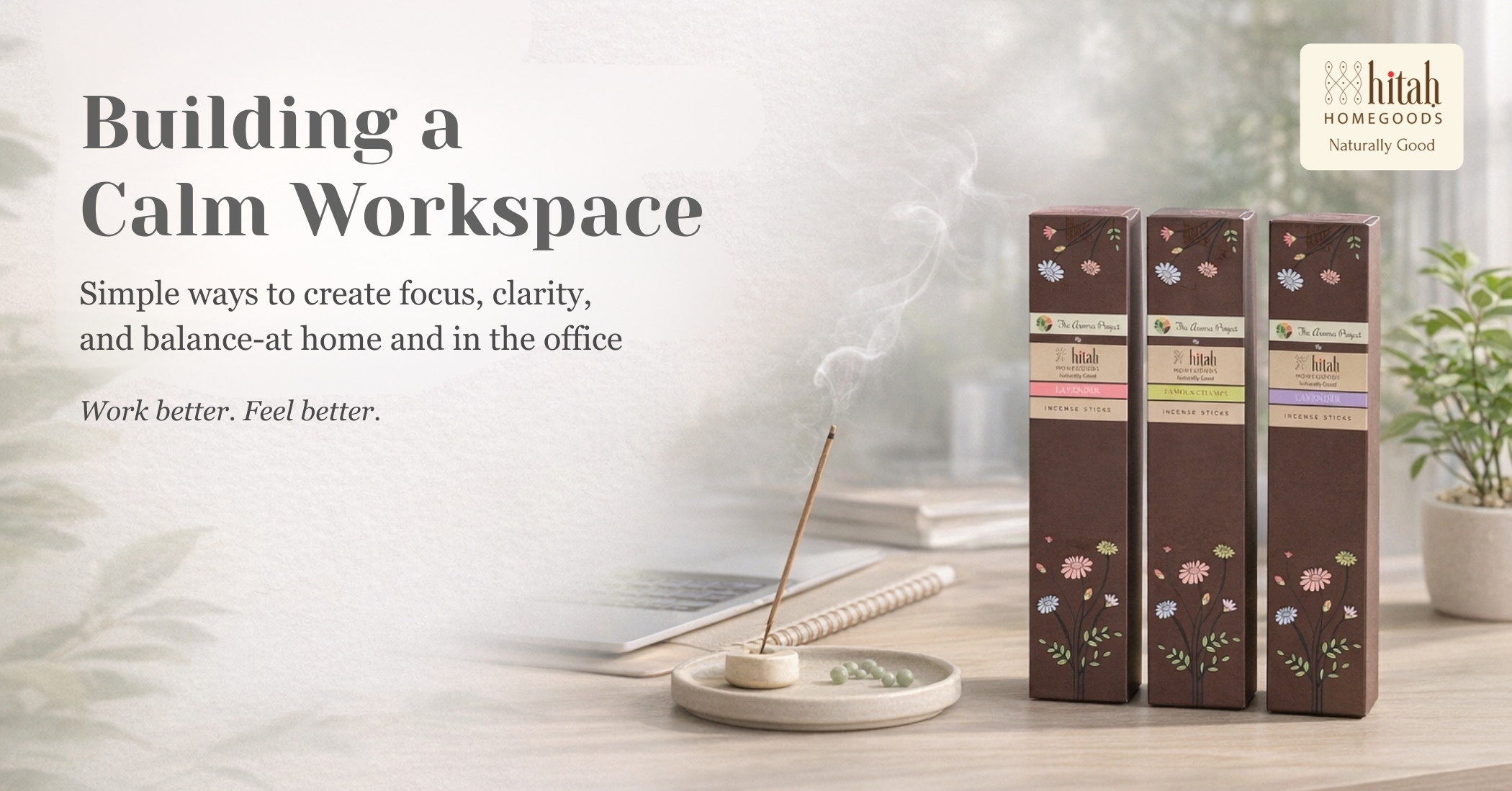
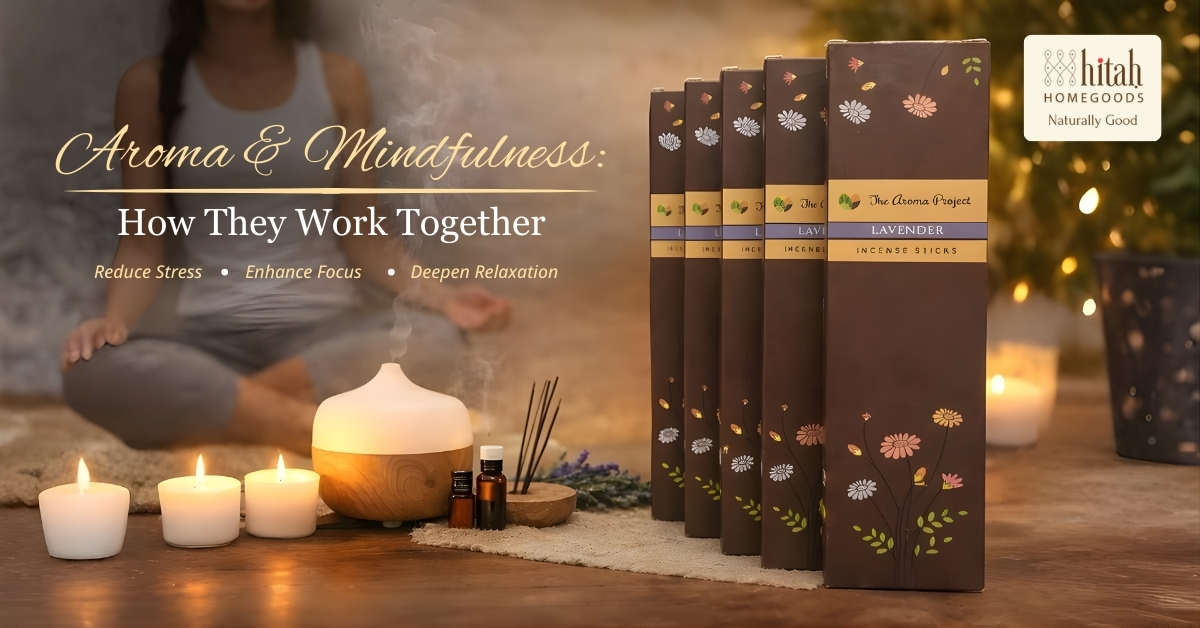
If you want to deepen your mindfulness practice, natural incense can help create a consistent sensory ritual.
Explore handcrafted natural incense sticks designed for calm, focus, and emotional balance at
Hitah Home Goods Pvt Ltd
Visit: https://hitahhomegoods.in/
Bring presence, peace, and intention into your everyday moments.