

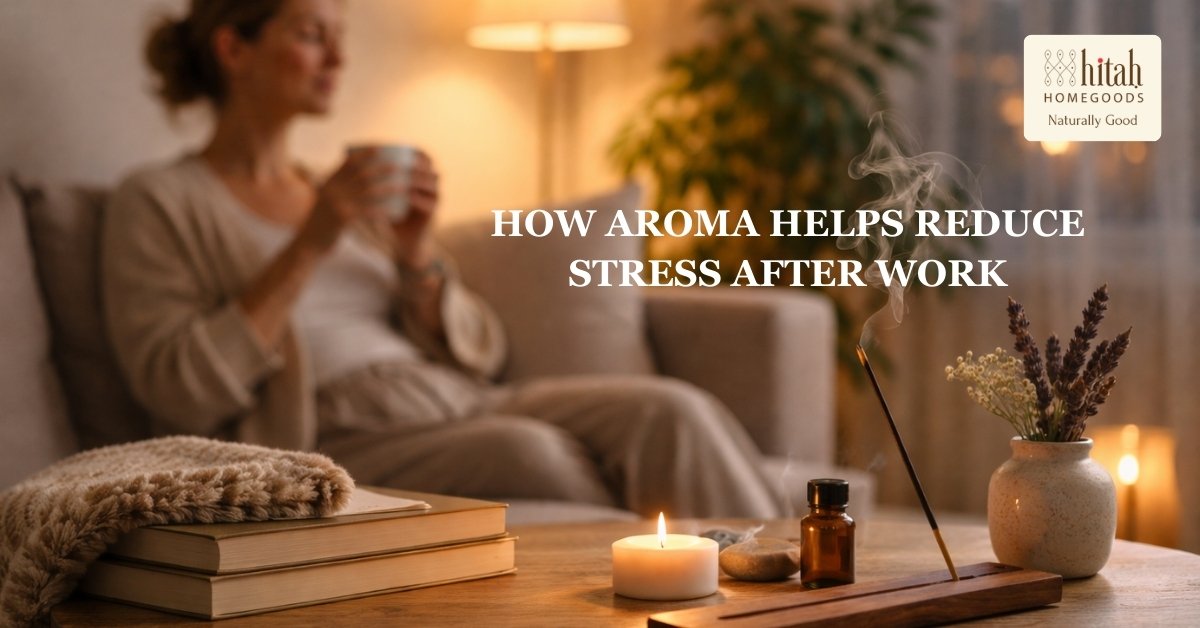
After a long day of meetings, commutes, screens, and constant “one more thing,” your body often gets home before your nervous system does. That wound-up feeling—tense shoulders, busy thoughts, shallow breathing—isn’t just in your head. It’s your stress response still running.
Aromas (from essential oils, plants, teas, and everyday scents like citrus) won’t erase a hard day. But a growing body of research suggests that certain smells can support relaxation by nudging the brain and body toward a calmer state, especially when paired with intentional wind-down habits. Here’s how it works, what science says, and how to try it safely.
Smell is the only sense that has such direct access to brain areas involved in emotion and memory. When you inhale an aroma, odor molecules activate receptors high in your nasal cavity. Those signals travel to the olfactory bulb and then rapidly connect with limbic regions like the amygdala and hippocampus—areas tied to threat detection, emotional tone, and memory. This “fast lane” is one reason a scent can instantly feel soothing, uplifting, or nostalgic.
Stress, meanwhile, is largely a nervous-system state. When you’re under pressure, the sympathetic nervous system and the HPA axis (hypothalamic–pituitary–adrenal axis) can increase alertness and cortisol. Shifting into a calmer state often involves increasing parasympathetic activity (the “rest and digest” side). Smell can be one gentle input—along with breathing, light, sound, and routine—that helps signal safety and downshift arousal.
Aromatherapy research is mixed, but there are consistent themes:
∙Lavender is the most studied scent for relaxation and anxiety-related outcomes. Several randomized trials and meta-analyses suggest lavender (often Lavandula angustifolia) can reduce subjective anxiety and improve sleep quality for some people.
∙Citrus aromas (like sweet orange or bergamot) are frequently associated with improved mood and reduced tension in small clinical and experimental studies.
∙Peppermint is often linked with alertness rather than relaxation—useful if your “after work” slump is fatigue, but not always ideal if you’re already wired.
∙Context matters a lot. Smell effects are stronger when the scent is personally pleasant and paired with calming routines (bath, stretching, journaling). If you hate lavender, it’s unlikely to relax you.
Importantly, aromatherapy is not a replacement for treating anxiety disorders, depression, trauma, or chronic insomnia. Think of it as a low-effort tool that may slightly improve your recovery after work, like making a cup of tea, dimming lights, or playing calming music.
Below are science-backed mechanisms researchers propose, plus practical ways to apply them.
Some studies measuring physiological markers (like heart rate, blood pressure, or heart-rate variability) suggest certain aromas may promote a shift toward parasympathetic activity. Lavender has been associated with calming effects in both clinical and lab settings.
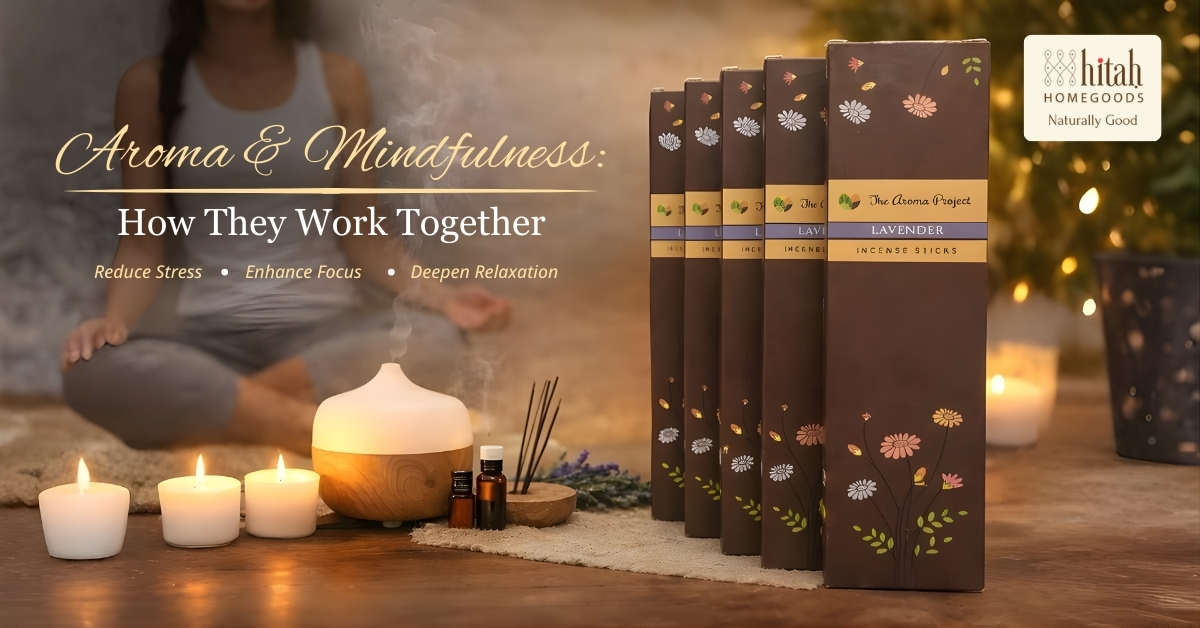
Try it after work: Put a drop or two of lavender essential oil in a diffuser for 15–30 minutes while you do something inherently relaxing (shower, light stretching, reading). The pairing matters: your brain learns “this smell = wind-down.”
Stress isn’t only what happens to your body, it’s also how your brain labels your experience. Pleasant smells can improve affect (mood) and reduce feelings of tension in some people. Citrus scents are often studied here because they’re widely liked and strongly associated with cleanliness, freshness, and energy.
Try it after work: If you feel irritable or flat, try a citrus scent (sweet orange or bergamot) during a short “transition ritual” right after you get home: wash your hands, change clothes, open a window, and inhale slowly for one minute.
One of the most underrated ways aromas helps is behavioral: it becomes a consistent signal that separates work mode from home mode. This is especially useful if you work remotely or check emails late.
Try it after work: Choose one scent that you only use for decompression. Use it at the start of a 10-minute routine (phone down, breathe, light movement). Over time, the aroma can become a conditioned cue for relaxation.
Sleep is when our body recovers from stress. If your post-work stress spills into bedtime, aromatherapy may help as part of sleep hygiene. Lavender has been studied for sleep quality, including in hospital settings and among people with mild sleep complaints.
Try it after work: Instead of diffusing all evening, use aroma closer to bedtime: a warm bath with a diluted essential oil (or a lavender-scented lotion), then keep the bedroom cool and dark.
Breathing is one of the fastest ways to influence the nervous system. Aroma can make breathing exercises feel more pleasant which helps you practice them when you’re stressed.
Try it after work (60 seconds):
1.Hold a tissue near your face (or your hands with a tiny amount of diluted oil).
2.Inhale through your nose for a count of 4.
3.Exhale slowly for a count of 6.
4.Repeat 6 times.
The scent becomes a small reward and anchor for the habit.
This routine is designed for real life—short, repeatable, not precious.
1.Transition cue (1 minute): As soon as you’re home, use your chosen scent (diffuser, inhaler stick, or lotion).
2.Downshift breath (2 minutes): 4-second inhale, 6-second exhale.
3.Body release (3 minutes): Shoulder rolls, neck stretches, or a brief walk around the block.
4.Clean ending (2 minutes): Put your work items away (bag, laptop), wash your hands/face.
5.Pleasant focus (2 minutes): Tea, music, or a quick journal note: “What went well today?”
Over time, the combination of aroma + routine becomes more powerful than aroma alone.
Essential oils are concentrated substances—treat them with respect:
∙Do not ingest essential oils unless under guidance from a qualified medical professional; ingestion can be dangerous.
∙Dilute it before applying it to skin. Many oils can irritate skin or cause allergic reactions. Use a carrier oil and patch test.
∙Be cautious with pets, asthma, and migraines. Some scents can trigger headaches or breathing symptoms; some oils are unsafe for cats and dogs.
∙Ventilation matters. Diffuse for limited periods rather than continuously.
∙Pregnancy, young children, and medical conditions: check with a clinician before regular use.
If you want the “aroma experience” without essential oils, you can use lower-risk options like fresh citrus peel, herbs (rosemary, mint), brewed tea, or naturally scented lotions.
If you want a simple starting point:
∙For calming/relaxation: lavender
∙For mood lift and tension relief: sweet orange or bergamot
∙For “clear head” after mental overload: rosemary (some find it clarifying)
∙For post-work fatigue: peppermint (more energizing than calming)
The best scent is the one you genuinely like and will use consistently. Pleasantness is not a trivial factor—it’s central to whether your brain interprets the input as comforting.
Aroma won’t fix a toxic job or erase a stressful commute. But smell is a powerful, direct line to emotion and physiology. Used intentionally—especially as part of a repeatable “end of day” ritual—certain aromas may help your body shift out of work mode, reduce perceived stress, and support better sleep.
If you’re curious, treat it like an experiment: pick one scent, use it the same way for a week, and notice whether your evenings feel even 5–10% easier. Sometimes that small shift is enough to make the rest of your recovery habits stick.
Caution: All breathing exercises should be done with caution and must be learnt from a certified instructor.
🌿 Explore calming natural fragrances for your evening reset:
https://hitahhomegoods.in/