
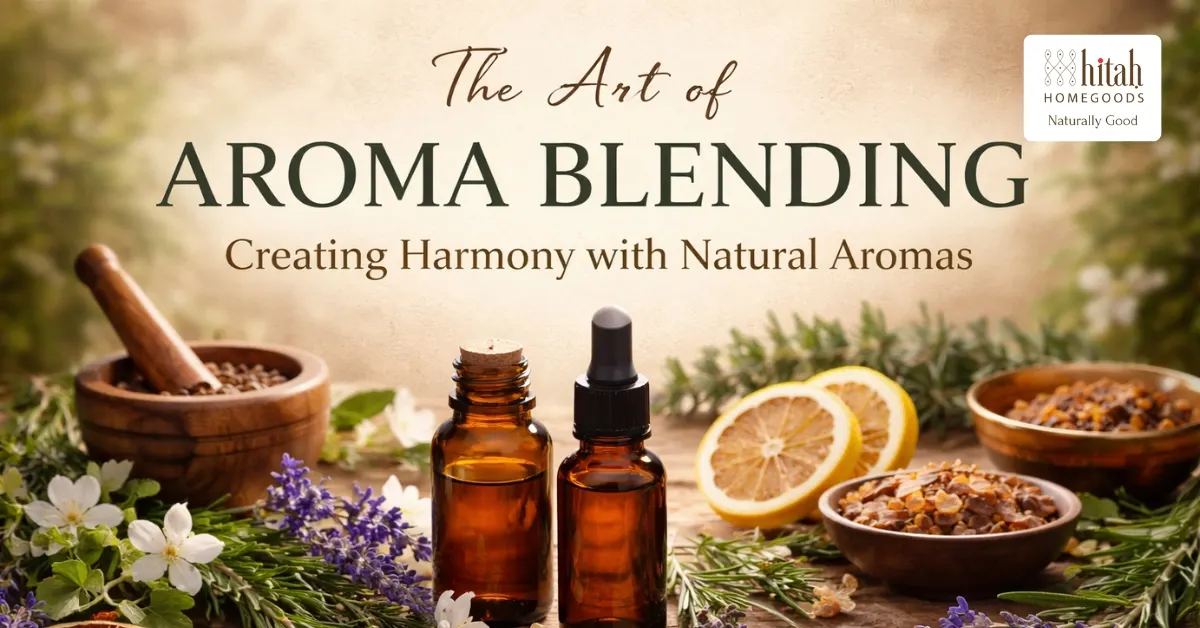
In a world that moves fast and feels increasingly digital, scent remains one of the most powerful ways to reconnect with nature, memory, and self. A thoughtfully crafted natural fragrance can transform a space, elevate emotions, and create a sense of comfort that lingers long after the moment has passed. Aroma blending is more than fragrance creation—it is an ancient art rooted in culture, ritual, and well-being, refined over centuries and still deeply relevant today.
From sacred temples and royal courts to modern homes, aroma blending has always been a way for humans to shape their environment, express identity, and influence mood. When practiced with intention, aroma blending creates fragrances that feel effortless, authentic, and deeply personal—never overpowering, always harmonious.
Natural aroma blending differs significantly from synthetic fragrance creation. Essential oils and botanical extracts are complex, living ingredients shaped by climate, soil, harvest time, and traditional extraction methods. This natural variability gives depth and character to each aroma, making every blend subtly unique.
Ancient civilizations instinctively understood this. Long before laboratories existed, people relied on plants, resins, woods, and spices to create meaningful scents. Unlike artificial fragrances that often feel flat or sharp, natural aroma blending results in fragrances that evolve gently over time. As the aroma unfolds, it reveals layers—freshness at first, warmth in the middle, and a grounding finish that lingers. This progression mirrors how scent has always been experienced in nature and ritual.
One of the earliest known centers of aroma blending was ancient Egypt. Fragrance played a sacred role in daily life, medicine, and spirituality. Egyptians blended resins like frankincense and myrrh with oils and herbs to create kyphi, a complex incense used in temples and homes. This ancient aroma blending practice was believed to calm the mind, encourage sleep, and connect the physical world with the divine.
Kyphi itself was a layered blend—an early example of top, middle, and base notes working in harmony.
In India, aroma blending has been deeply intertwined with Ayurveda for over 3,000 years. Natural oils such as sandalwood, vetiver, rose, and jasmine were blended not only for fragrance but also for balancing the mind, body, and spirit.
Traditional Indian aroma blending focused on emotional and energetic effects—cooling, grounding, or uplifting—depending on individual needs. The use of attar, a natural perfume derived from flowers and herbs distilled into sandalwood oil, reflects a sophisticated understanding of long-lasting base notes and subtle floral hearts.
Ancient Chinese aroma blending evolved alongside medicine and philosophy. Herbs, woods, and resins were blended to support harmony and balance, aligning with principles of yin and yang. Incense blending was used in meditation, healing, and scholarly pursuits, where scent was believed to sharpen focus and cultivate inner calm.
Similarly, in Japan, the art of Kōdō (the way of incense) elevated aroma blending into a refined sensory discipline. Rather than overpowering fragrance, subtlety and appreciation of natural wood aromas became central.
The Middle East has long been a crossroads of spice and resin trade, making it a rich hub of aroma blending traditions. Frankincense, oud, amber, and spices were blended into deep, luxurious compositions used in homes, ceremonies, and personal adornment.
Arabian aroma blending emphasized richness and longevity—base-heavy blends designed to linger and envelop spaces with warmth and depth. This tradition still influences modern aroma blending, especially in woody and resinous profiles.
Despite cultural differences, the structure of aroma blending remains remarkably consistent across time and geography. Successful blends rely on three key layers:
Top notes are the opening act in aroma blending. Light and refreshing, they create the first sensory impression.
Common top notes:
Historically, citrus peels and fresh herbs were often used in rituals to cleanse spaces and awaken the senses.
Middle notes form the soul of the blend. They emerge once the top notes fade and give the fragrance its identity.
Popular middle notes:
Ancient aroma blending traditions often centered on these notes for emotional balance and healing.
Base notes are the foundation of aroma blending-rich, grounding, and long-lasting.
Common base notes:
These ingredients were historically prized and traded because of their staying power and spiritual symbolism.
One of the most enduring aspects of aroma blending is its emotional language. Scent bypasses rational thought and connects directly with memory and feeling. This is why ancient cultures used aroma blending in ceremonies, healing, and daily life.
Different aroma blending combinations evoke different emotional states:
Across civilizations, aroma blending was understood as a tool for emotional alignment.
One principle unites ancient and modern aroma blending: balance. Overpowering scents were rarely valued. Instead, harmony between notes created a fragrance that felt natural and inviting.
A commonly followed guideline in aroma blending today mirrors ancient intuition:
This structure ensures smooth transitions and a well-rounded sensory experience.
Thoughtful aroma blending adapts to function and atmosphere:
These principles echo how scent was historically matched to purpose.
Aroma blending is not a trend—it is a timeless practice that bridges ancient wisdom and modern living. From Egyptian temples to Indian palaces, from Chinese scholars’ rooms to contemporary homes, blending natural aromas has always been about creating harmony.
Natural aroma blending offers a quiet form of everyday luxury: intentional, sustainable, and deeply human. It transforms routines into rituals and living spaces into sanctuaries.
The true art of aroma blending begins when you move beyond asking, “What smells pleasant?” and instead ask, “What atmosphere do I want to create?” When intention meets nature, aroma blending becomes a subtle yet powerful expression of balance—one that continues to enrich homes and lives, just as it has for thousands of years.